#development

South Africa Coaches Complete DNSS Phase 3, UWW Level 1 Course

By United World Wrestling Press

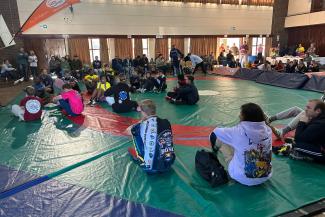
PRETORIA, South Africa (July 27) -- The third phase of South Africa's Development of the National Sport System (DNSS) concluded successfully in Pretoria after five intensive days of learning, collaboration and practical coaching, reinforcing the country's commitment to building a new generation of qualified wrestling coaches.

Organised in partnership with United World Wrestling (UWW) and the South African Wrestling Federation (SAWF), the programme brought together coaches from across South Africa to complete the UWW Level 1 Coaching Course, combining theoretical knowledge with practical application.

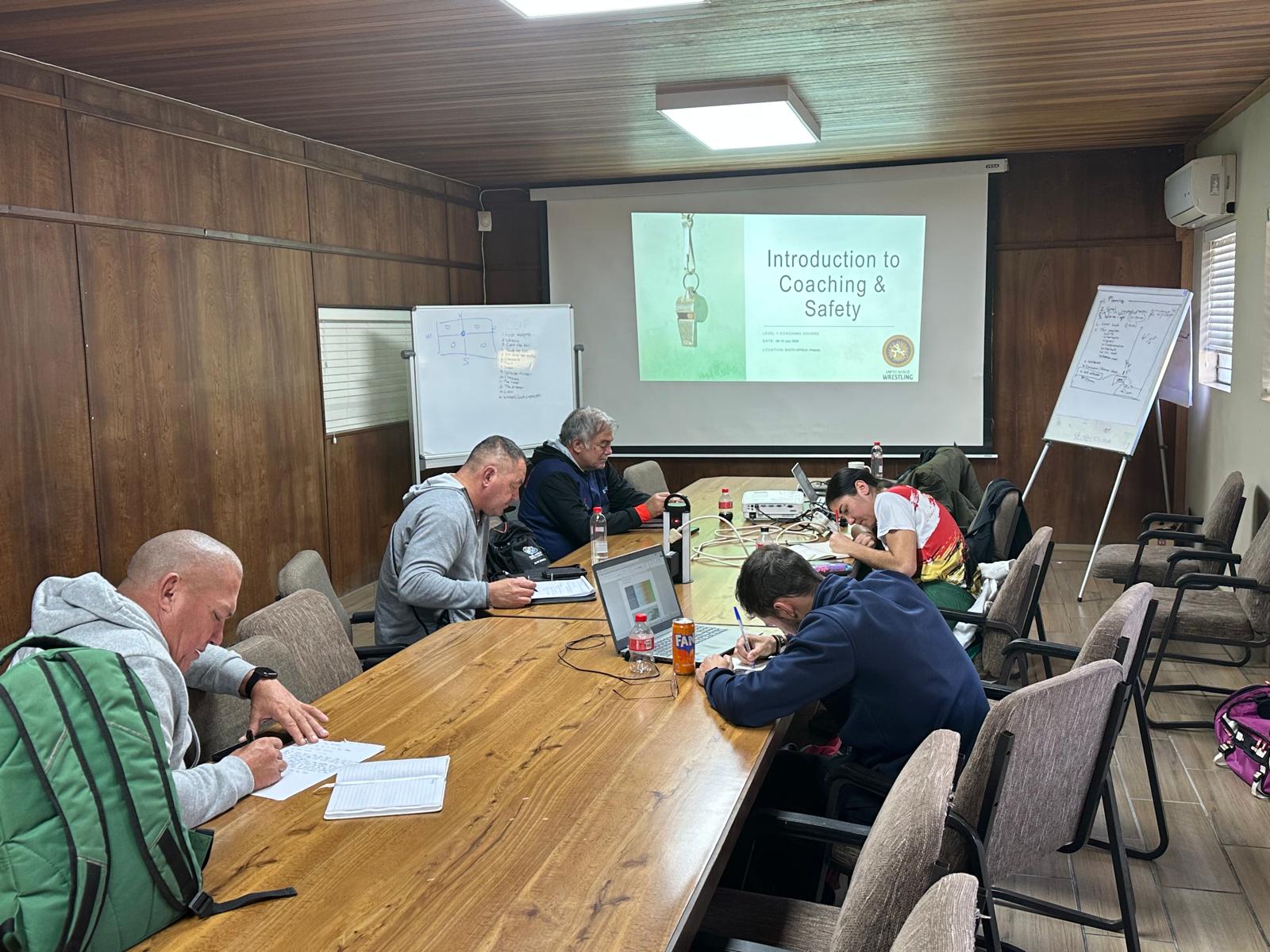
Throughout the week, participants followed a comprehensive programme covering the foundations of modern wrestling coaching. Topics included athlete safety, risk assessment, communication, teaching methodology, discovery games, youth coaching, the GROW coaching model, safeguarding, environmental responsibility and anti-doping, before concluding with written and practical assessments.
Wrestling South Africa

The course was delivered by UWW Development Officer for Africa Vincent AKA, whose international experience provided valuable insight into athlete development and coach education. Earlier in the week, Aka also visited the Sonic Wrestling Tournament in Glencoe, where he encouraged young wrestlers and highlighted the essential role coaches play in the growth of wrestling.

"Without dedicated wrestling coaches, we will not be able to grow this ancient sport," Aka reminded the participants.

Beyond the classroom and the wrestling mat, the course fostered strong relationships among participants. Coaches exchanged experiences, challenged one another through practical exercises and created a collaborative environment that reflected the values promoted by UWW: Respect, Excellence, Friendship and Integrity.

As the programme came to a close, Louise JANSE VAN RENSBURG praised the commitment shown by every participant and encouraged them to become ambassadors of wrestling development within their own provinces.

She thanked Aka and also encouraged every coach to share their newly acquired knowledge, support fellow coaches and contribute to the long-term development of South African athletes.

Chairperson of Coaches Council Markus DEKKER reminded participants that the friendships, professional relationships and memories created during the course should continue well beyond Pretoria, strengthening the national wrestling community for years to come.

The final day concluded with the written examination, course evaluation and the presentation of UWW Level 1 Coaching certificates, marking another important milestone in the implementation of the DNSS programme and South Africa's long-term coach education pathway.
#development

Italy Organizes UWW Level 3 Technical Course for Coaches

By United World Wrestling Press

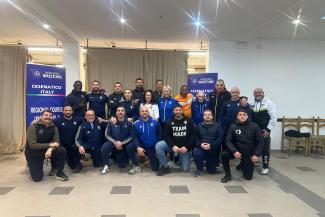
CESEBATICO, Italy (February 9) -- A United World Wrestling Level 3 Technical Course for coaches was successfully organized in Cesenatico, Italy from January 5 to 9, 2026. The course was organized in collaboration with UWW and the FIJLKAM.

Organised after a international tournament, the course brought together 33 coaches from Italy and other countries, including Germany, Poland, Croatia and Ivory Coast creating a rich environment for technical exchange, professional development and international cooperation.

This tournament provided an important practical framework for the educational programme, allowing coaches to observe real competition situations, analyze match management and technical-tactical aspects, and directly link theoretical learning to high-level competitive practice.

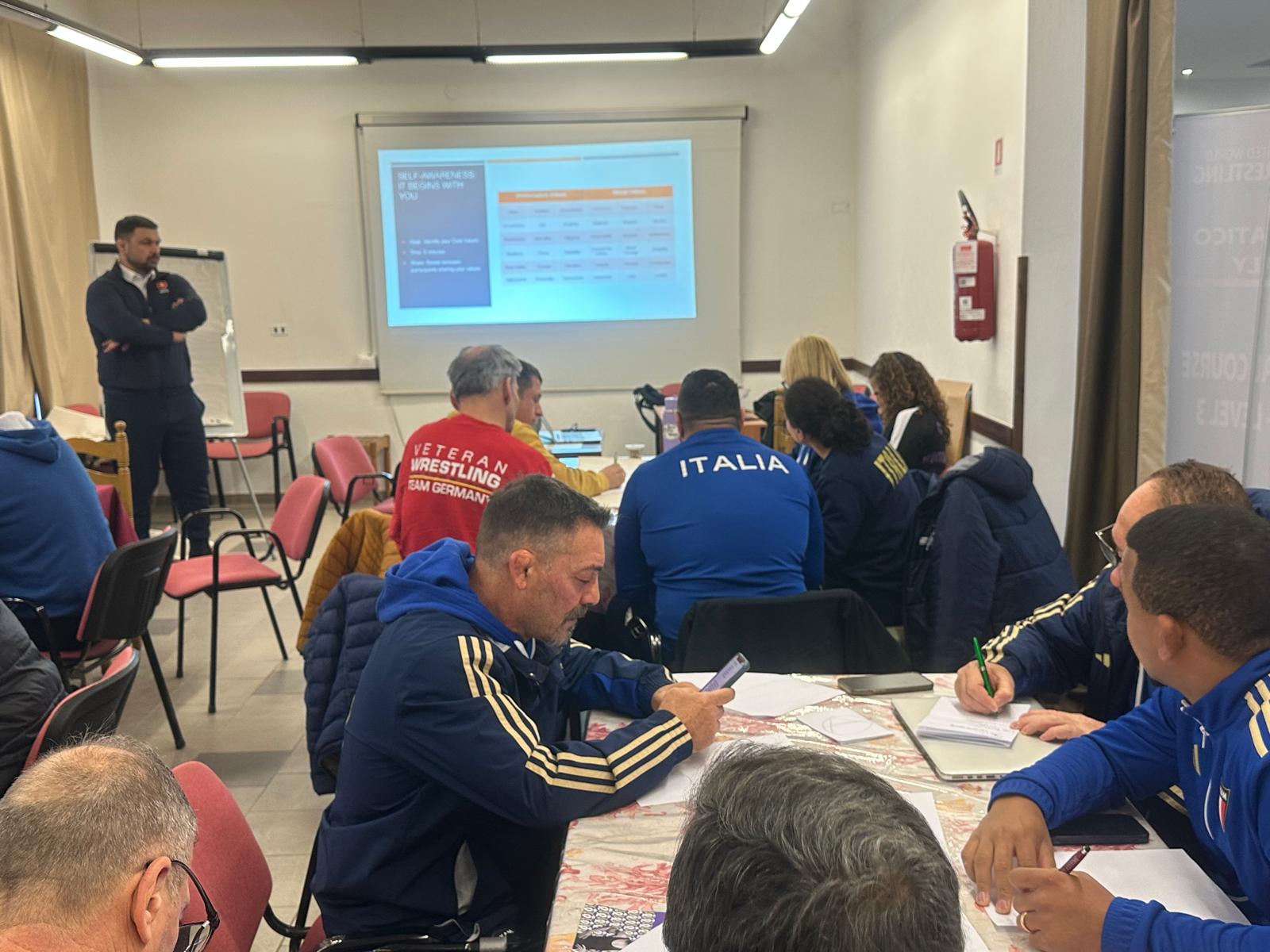
The programme was led by UWW Development Officer Vincent AKA, with practical sessions conducted by Olympic Champion and UWW expert Komeil GHASEMI. The course followed the new UWW education pathway, focusing on advanced coaching competencies for high-performance environments.

Italy

The key topics in the course included coaching philosophy and leadership, advanced planning and periodization, pedagogical situations and match analysis, technical and tactical development, safeguarding, anti-doping and athlete protection and introduction to Beach Wrestling.

Both theoretical and practical evaluations were conducted, allowing participants to apply their knowledge in real coaching situations. At the conclusion of the course, all successful participants were awarded the UWW Level 3 Coaching Certificate.

"I want to thank everyone for this course, for what you did, and for how we got along together," Carmelo RICCARDO, a coach and participant said. "It was a wonderful experience and very interesting course. Thanks to the UWW and FIJLKAM for these important opportunities for growth."

The Italian Wrestling Federation provided high-quality facilities, with classrooms and training venues meeting international standards. All activities were centralized at Villaggio Accademia Cesenatico, ensuring optimal logistical conditions for both learning and training.

The course benefited from the continuous presence of national federation representatives, including the Technical and Sports Directors, as well as the participation of FIJLKAM leadership during the closing ceremony—demonstrating strong institutional commitment to coach education.

After the course, it achieved its educational and development objectives. The combination of high-level technical content, structured evaluations, international expertise, and strong human values.

The course not only strengthened the competencies of participating coaches but also reinforced Italy’s role as a key hub for wrestling education and excellence in Europe, contributing sustainably to the long-term development of the sport.

Sustainability

From a sustainability perspective, the use of the covered stadium contributed to the efficient organization of Beach Wrestling activities by optimizing existing infrastructure. By adapting a multi-purpose covered venue for Beach Wrestling sessions, the organizers limited the need for additional temporary installations, reduced logistical and environmental impact, and ensured continuity of activities regardless of weather conditions.

This approach reflects UWW’s commitment to sustainable event organization through the рационal use of facilities and long-term infrastructure legacy.