Refugee Day

With Support of Community, Al Obaidi is Painting a Bright Future

By United World Wrestling Press

INZING, Austria (June 20) -- Aker Al Obaidi had been working as a painter for two years before Benedikt "Mo" Ernst finally convinced the young Iraqi refugee to move to the small town of Inzing, Austria.

The small town, population 4000, intimidated the former Baghdad resident. He'd always known bigger cities, and found comfort in wrestling. 

To help, Coach "Mo" furnished an apartment for Al Obaidi and set up the young Greco-Roman grappler with a series of training opportunities. After a few weeks of acclimating to the new city, Al Obaidi invited Mo over for dinner and showed him the job he'd done painting the apartment.

It was not what Coach was expecting. Greeting him in the living room was the large five-ring logo of the Olympic Games.

"I painted the Rings on this wall because I want to see them every day," said Al Obaidi. "This is my motivation to work as hard as I can and reach my goal!“

Shortly after painting the Rings on his wall AL Obaidi and Coach Mo received word from the IOC that they had chosen Al Obaidi for the IOC Refugee Athletic Scholarship and would be supporting his Olympic journey.

Members of the Austrian national team who live in Inzing have helped provide Al Obaidi the training he needs to prepare for the Olympic Games, as he also attends every camp and tournament of the Austrian wrestling federation.

Al Obaidi's training during COVID has been difficult since he's not allowed to train in the training hall. Instead his coach has organized a special program for him to maintain his shape.

"He is one of the motivated guys I have," said Mo. "He has developed his strength and endurance very well during this hard time."

Like most of the wrestling world Al Obaidi isn't quite sure what will happen with COVID-19, but for now he plans to start wrestling training once cleared by the Austrian government - maybe as early as July.

The plans then include training camps and possibly trips to the U23 Europeans in Bucharest at the beginning of October and the U23 World Championship in Finland. If he's very lucky with travel arrangements, maybe some international training camps in Hungary, Germany and Ukraine between tournaments.

"He works hard and I know if Aker qualifies for the Olympics in Tokyo 2021," said Mo. "His dream will come true."
Obituary

Abdullah Movahed: Iranian Legend Who Elevated Wrestling to Art Form

By United World Wrestling Press

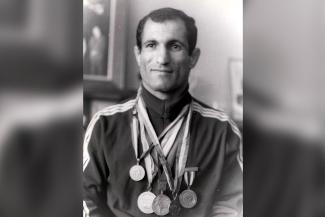
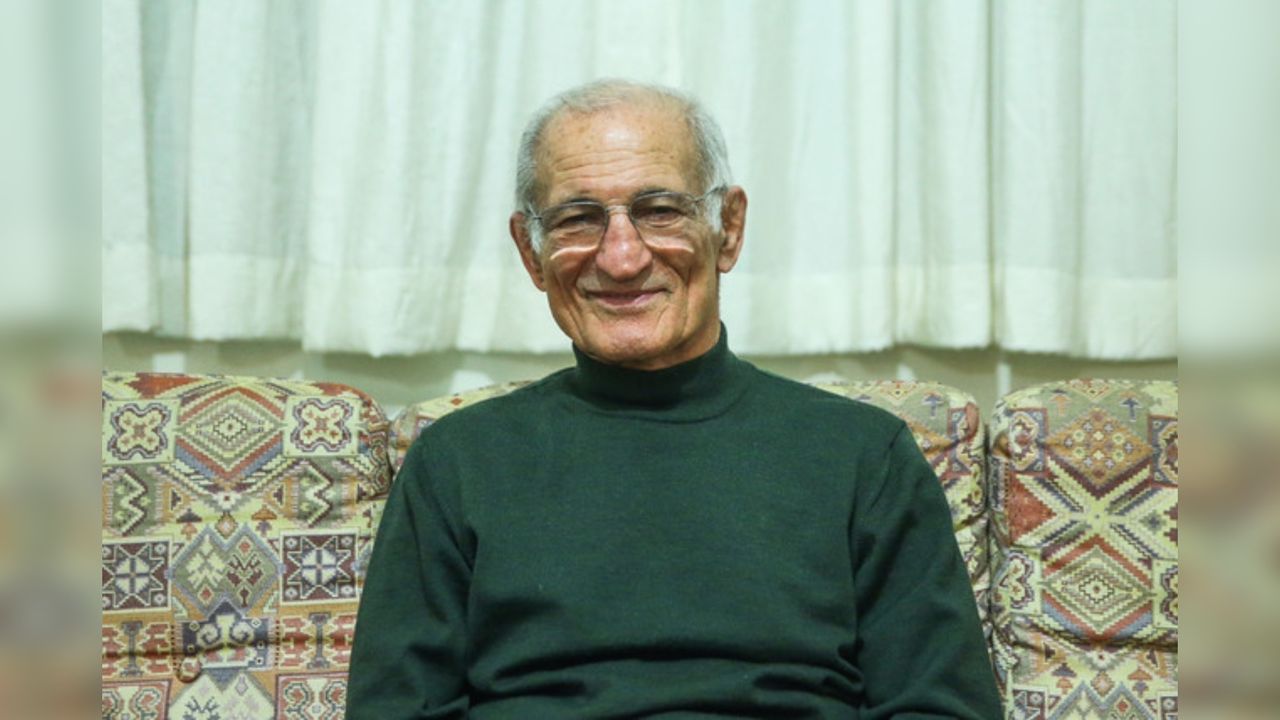
CORSIER-SUR-VEVEY, Switzerland, (May 1) -- Abdullah MOVAHED (IRI), one of the all-time greats of world wrestling and a dominant force in Freestyle during the 1960s, passed away in the United States on Thursday, April 30, after suffering a heart stroke. The Iranian legend was 86.

A member of the United World Wrestling Hall of Fame, Movahed’s name became synonymous with technical brilliance and relentless discipline. A five-time world champion, an Olympic gold medalist and twice Asian Games winner, Movahed was at the forefront of an era of Iranian excellence on the global stage. Competing in the 68kg and 70kg Freestyle weight classes, Movahed achieved a level of sustained dominance rarely seen in the sport.

Born in March 1940 in Babolsar, in Iran’s Mazandaran province, Movahed was introduced to volleyball as a young boy and was known locally for his exploits as a spiker. However, he quit the sport as he felt he wasn’t tall enough and didn’t believe he was suited for it. Ultimately, it was on the wrestling mat that he would carve out his legacy. 

He went on to join the Tehran Javan Sports Club, and as a youngster, Movahed didn’t have it easy. He frequently lost to established wrestlers like Mohammad SANATGARAN (IRI). However, he persevered, and coaches recognized his rare blend of agility, intelligence, and composure under pressure. These traits would define his career.

Movahed emerged during a time when Iranian wrestling was rich in talent. He shared the stage with wrestling legends such as Gholamreza TAKHTI (IRI), Mansour MEHDIZADEH (IRI), Ebrahim SEYFPOUR (IRI), and Emamali HABIBI (IRI). In such a company, greatness was neither guaranteed nor easily attained, but Movahed’s rise was swift.

His breakthrough came in 1962, when the erstwhile Soviet Union’s Freestyle champions travelled to Iran for a series of friendly bouts. His win over Zarbag BERYASHVILI made him an overnight sensation in Iran, and the following year, Movahed made his debut for the Iranian national team at the World Championships in Sofia, Bulgaria.

As a 23-year-old rookie, Movahed didn’t make much of an impact -- he shared sixth place with well-known Bulgarian wrestler Enyu VALCHEV (BUL). At the 1964 Olympics in Tokyo, he showed signs of improvement and finished fourth. A year later, at the World Championships in Manchester, he claimed his first world title, beginning an extraordinary run.

Abdullah MOVAHED (IRI)

From 1965 to 1970, Movahed was virtually untouchable. He won six consecutive major global titles at 68kg and 70kg, including World Championships in 1965, 1966, 1967, 1969, and 1970, along with Olympic gold at the 1968 Summer Olympics. That 1968 triumph, often cited as the pinnacle of his career, showcased his tactical mastery and unyielding determination. He also won the gold medal at the 1966 and 1970 Asian Games.

He returned for the 1972 Summer Olympics, but an unfortunate shoulder injury cut his campaign short, preventing a final chapter that might have further illuminated his already illustrious record. After the Games, Movahed, who had a master’s degree, moved to the USA, where he pursued a PhD at George Washington University. He continued to live there after earning his doctorate and worked as a mechanic.

Abdullah MOVAHED (IRI)

Beyond his medals, Movahed’s legacy lies in the standard he set. He helped define a golden generation of Iranian wrestling and inspired countless athletes who followed in his footsteps. His induction into the United World Wrestling's Hall of Fame secured his place among the all-time greats.

In mourning his passing, the wrestling world remembers not just a champion, but a craftsman whose sustained excellence elevated freestyle wrestling to an art form.