#development

Uruguay hosts pair of Coaches Courses, Introduction to Refereeing

By United World Wrestling Press

MONTEVIDEO, Uruguay (November 11) --- Keeping with the series of UWW courses that are taking place in the American continent, on this occasion was the time of Montevideo from November 1 to 7. The courses were: Coaches Course Level 1 and Level 2 and Introduction to Refereeing. A total of 31 participants took part in the course. The majority of the coaches were from Uruguay, but there also were participants from six other countries.

This course is part of the UWW's education program, and the purpose is to provide the coaches with tools to strengthen their professional work. The course consisted of several sessions between theoretical and practical, structured in such a way that what was learned in the classroom was applied on the mat.

This course was made with the support of the Olympic Solidarity, the Uruguayan Olympic Committee, and the Uruguayan Wrestling Federation.

URUParticipants from the Uruguay courses gather for a photo. (Photo: United World Wrestling)

All the activities were held in the brand-new Combat Sports Training Center, founded in 2019, with two mats and a classroom that makes it easy to take the course.

The opening ceremony was held on November 2 and was attended by distinguished personalities such as the President of the National Olympic Committee, Julio C. MAGLIONE, the National Secretary of Sports, Sebastián BAUZÁ and the President of the Uruguay Wrestling Federation, Dante STEFANO.

We had the educators Pedro ROJAS (PUR) for the coaches and Ignacio D'Alessandro (ARG) for the referees. 

"We are very pleased with the outcome of the course. We found a group of participants with a basic level of knowledge of the sport but who were willing to learn and make the most of the concepts and tools provided. We had five days of very fruitful work, and we went back home knowing that we had left the bases for Uruguay to start implementing a successful development program. We want to come back in a while to help them take it to the next level". say Ignacio D’Alessandro, Referee Educator.

The Uruguayan Wrestling Federation is starting to work very hard in the development of the sport in its country. And from the UWW, we hope to continue working in this way with them and accompany them in their growth and institutional strengthening.
Obituary

Abdullah Movahed: Iranian Legend Who Elevated Wrestling to Art Form

By United World Wrestling Press

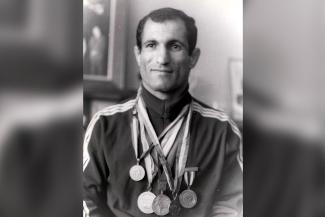
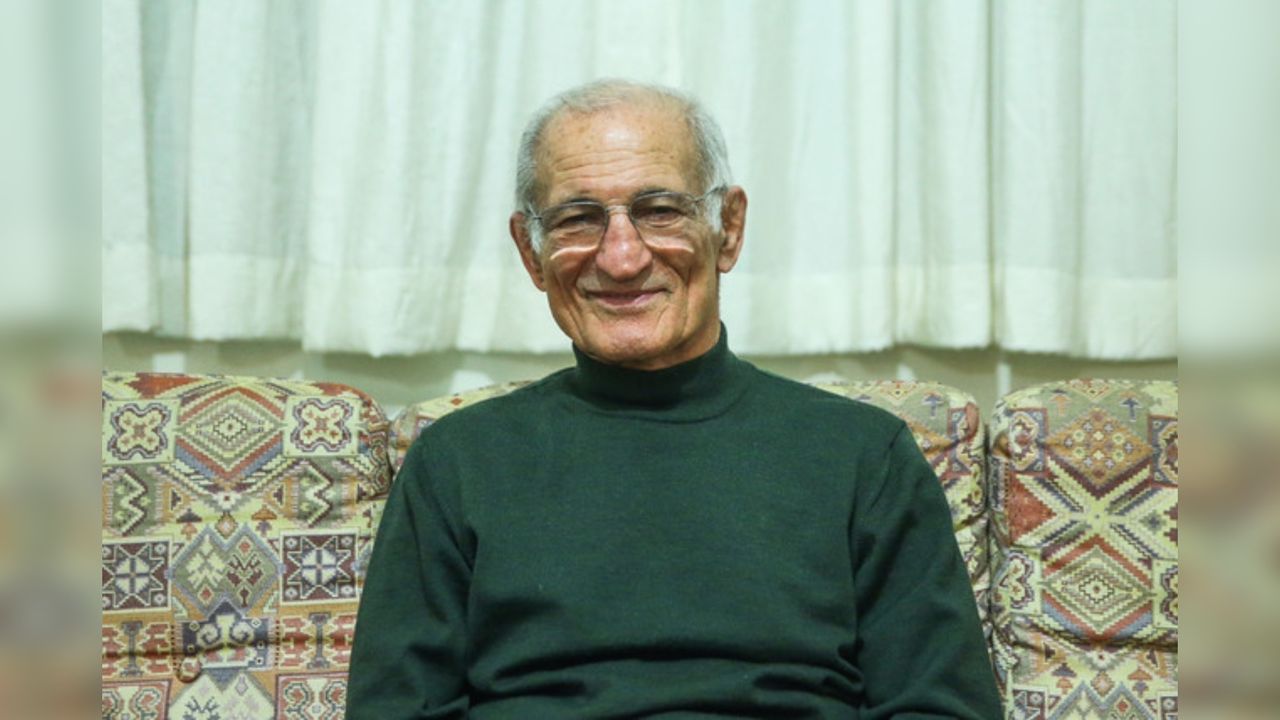
CORSIER-SUR-VEVEY, Switzerland, (May 1) -- Abdullah MOVAHED (IRI), one of the all-time greats of world wrestling and a dominant force in Freestyle during the 1960s, passed away in the United States on Thursday, April 30, after suffering a heart stroke. The Iranian legend was 86.

A member of the United World Wrestling Hall of Fame, Movahed’s name became synonymous with technical brilliance and relentless discipline. A five-time world champion, an Olympic gold medalist and twice Asian Games winner, Movahed was at the forefront of an era of Iranian excellence on the global stage. Competing in the 68kg and 70kg Freestyle weight classes, Movahed achieved a level of sustained dominance rarely seen in the sport.

Born in March 1940 in Babolsar, in Iran’s Mazandaran province, Movahed was introduced to volleyball as a young boy and was known locally for his exploits as a spiker. However, he quit the sport as he felt he wasn’t tall enough and didn’t believe he was suited for it. Ultimately, it was on the wrestling mat that he would carve out his legacy. 

He went on to join the Tehran Javan Sports Club, and as a youngster, Movahed didn’t have it easy. He frequently lost to established wrestlers like Mohammad SANATGARAN (IRI). However, he persevered, and coaches recognized his rare blend of agility, intelligence, and composure under pressure. These traits would define his career.

Movahed emerged during a time when Iranian wrestling was rich in talent. He shared the stage with wrestling legends such as Gholamreza TAKHTI (IRI), Mansour MEHDIZADEH (IRI), Ebrahim SEYFPOUR (IRI), and Emamali HABIBI (IRI). In such a company, greatness was neither guaranteed nor easily attained, but Movahed’s rise was swift.

His breakthrough came in 1962, when the erstwhile Soviet Union’s Freestyle champions travelled to Iran for a series of friendly bouts. His win over Zarbag BERYASHVILI made him an overnight sensation in Iran, and the following year, Movahed made his debut for the Iranian national team at the World Championships in Sofia, Bulgaria.

As a 23-year-old rookie, Movahed didn’t make much of an impact -- he shared sixth place with well-known Bulgarian wrestler Enyu VALCHEV (BUL). At the 1964 Olympics in Tokyo, he showed signs of improvement and finished fourth. A year later, at the World Championships in Manchester, he claimed his first world title, beginning an extraordinary run.

Abdullah MOVAHED (IRI)

From 1965 to 1970, Movahed was virtually untouchable. He won six consecutive major global titles at 68kg and 70kg, including World Championships in 1965, 1966, 1967, 1969, and 1970, along with Olympic gold at the 1968 Summer Olympics. That 1968 triumph, often cited as the pinnacle of his career, showcased his tactical mastery and unyielding determination. He also won the gold medal at the 1966 and 1970 Asian Games.

He returned for the 1972 Summer Olympics, but an unfortunate shoulder injury cut his campaign short, preventing a final chapter that might have further illuminated his already illustrious record. After the Games, Movahed, who had a master’s degree, moved to the USA, where he pursued a PhD at George Washington University. He continued to live there after earning his doctorate and worked as a mechanic.

Abdullah MOVAHED (IRI)

Beyond his medals, Movahed’s legacy lies in the standard he set. He helped define a golden generation of Iranian wrestling and inspired countless athletes who followed in his footsteps. His induction into the United World Wrestling's Hall of Fame secured his place among the all-time greats.

In mourning his passing, the wrestling world remembers not just a champion, but a craftsman whose sustained excellence elevated freestyle wrestling to an art form.