

Wrestling Enters a New Era in Southern Africa with Namib Storm and SADC Open Championships
Wednesday, August 13, 2025 - 13:57 By United World Wrestling Press
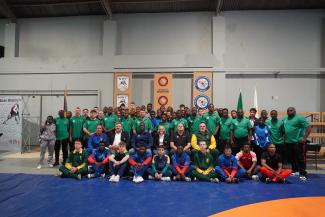
WINDHOEK, Namibia — July 2025 The Namibian Wrestling Federation (NWF), in partnership with United World Wrestling (UWW) and Olympic Solidarity, launched a landmark initiative to boost wrestling development in Southern Africa: the Namib Storm Wrestling Week and SADC Open Championships, held from 30 June to 5 July 2025 at the Windhoek Showgrounds.
Speaking at the official launch in Windhoek, NWF President Colin Steytler emphasized the significance of this new chapter for the sport:
“This is where everything comes together — grassroots, elite, and development levels. It’s the most important step we’ve taken to date in bringing our strategic goals to life.”
A New Benchmark for Regional Wrestling Development
The week-long event featured two core components:
- REDT – Namib Storm Training Camp (30 June – 3 July)
This high-performance camp delivered Level 3 Coaching and Level 2 Refereeing Certification under the guidance of UWW instructors — a first for Namibia and a major milestone for the region.
“You can’t grow grassroots wrestling without qualified coaches,” Steytler noted.
Coaches and officials from multiple countries, including Zambia, Zimbabwe, South Africa, and Mauritius, took part in intensive technical sessions.
- SADC Open Championships (4 July)
This tournament gathered elite athletes from Angola, South Africa, Zimbabwe, and beyond — many of whom are continental medallists. Importantly, the SADC Open became the first UWW-rated event in Southern Africa, enabling both athletes and referees to earn international exposure without needing to travel abroad.
“This changes the game,” said Steytler. “We can now compete regionally and still gain global recognition — this saves costs and boosts participation.”
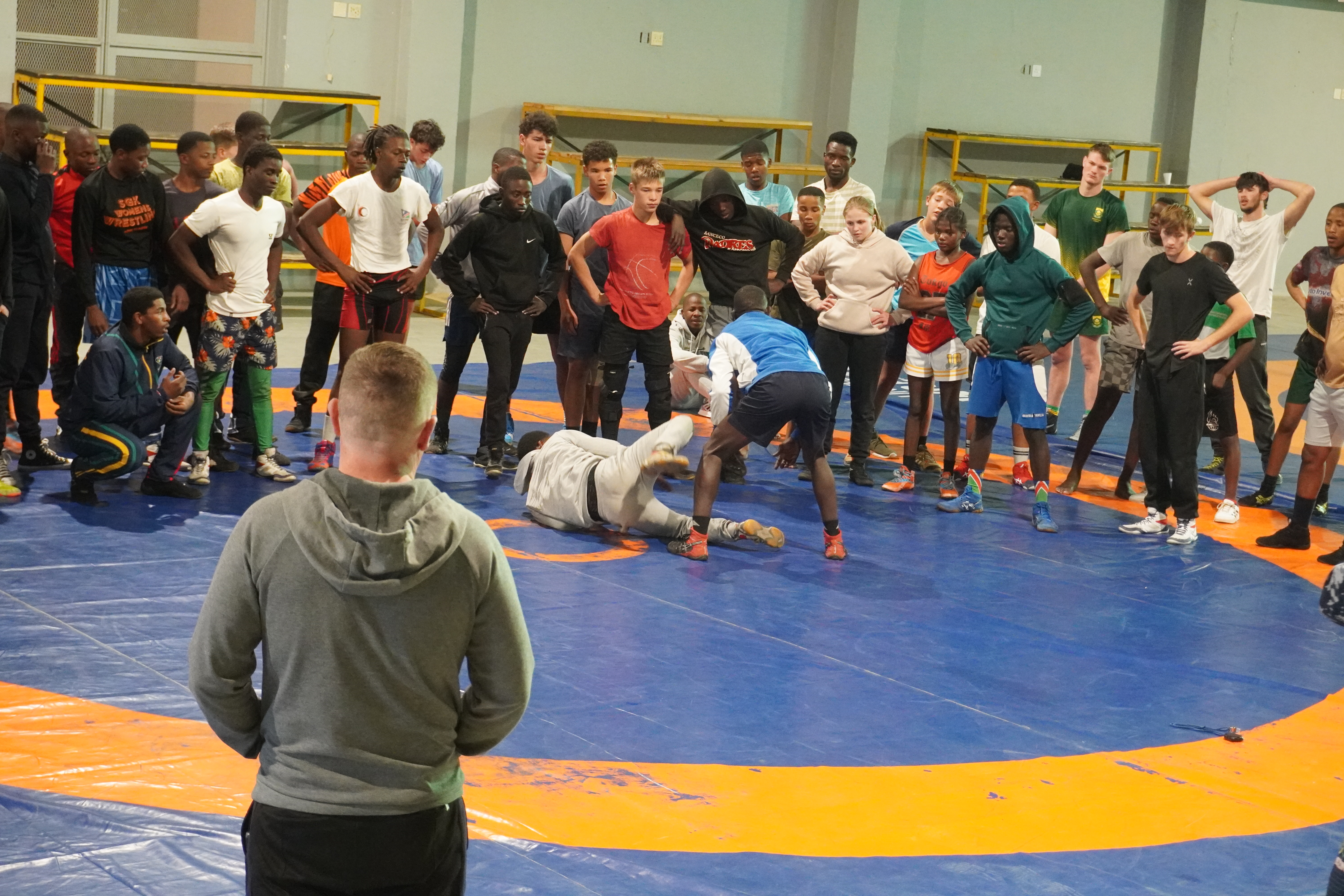 Attendees go through the Level 3 Coaching and Level 2 Refereeing Certification under the guidance of UWW instructors. (Photo: United World Wrestling)
Beach Wrestling: Taking the Sport to New Shores
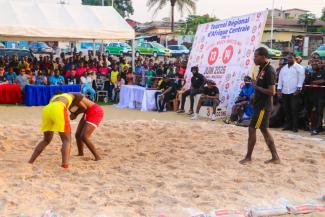
The week concluded on 5 July with a Beach Wrestling showcase, reinforcing UWW’s commitment to accessibility and outreach.
“Beach wrestling will be the only wrestling discipline featured at the 2026 Youth Olympic Games in Senegal,” Steytler reminded. “And we are proud to host Namibia’s first-ever beach wrestling event in Swakopmund on 7 December 2025.”
Beach wrestling, requiring only sand and a rope, offers a practical and inclusive way to expand the sport into rural and underserved communities — a cornerstone of UWW’s vision.
Towards a Self-Sustaining Wrestling Future
The REDT initiative and Namib Storm programme are part of the NWF’s five-year strategy to develop a self-sustainable wrestling ecosystem, bridging the gap between grassroots and elite competition and aiming for future Olympic qualification and medals.
“The Namib Storm Week and SADC Open pull all of our strategic elements together,” said Steytler. “From here, we take what we’ve built back to the regions and expand wrestling further than ever before.”
This event highlights Southern Africa’s growing role in the global wrestling community and reflects UWW’s dedication to regional empowerment, education, and international competition access.


Share your thoughts.
Comments