

Jordan hosts coaching and referee courses
Tuesday, August 30, 2022 - 17:19 By United World Wrestling Press

AMMAN, Jordan (August 29) -- Jordan Wrestling Federation hosted a series of education courses for their coaches and referees between August 5-17 in Amman. These courses were conducted in conjunction with United World Wrestling, Olympic Solidarity, and the Jordan Wrestling Federation.
The coaching courses were led by Ahmed KHEDHRI (TUN) while the referee course was led by UWW Referee Commission vice-president Kamel BOUAZIZ (TUN).
The first course conducted was the Introduction to Referee Course from August 5-7. Forty participants participated in the course which included six women referees. The participants learned the foundations of what it takes to be a successful referee.
The areas covered during the course included: the safety of the athletes, evaluation of holds, referee mechanics, positioning, and controlling the bout. The participants were active during the course and were able to practice their skills through practical evaluations.
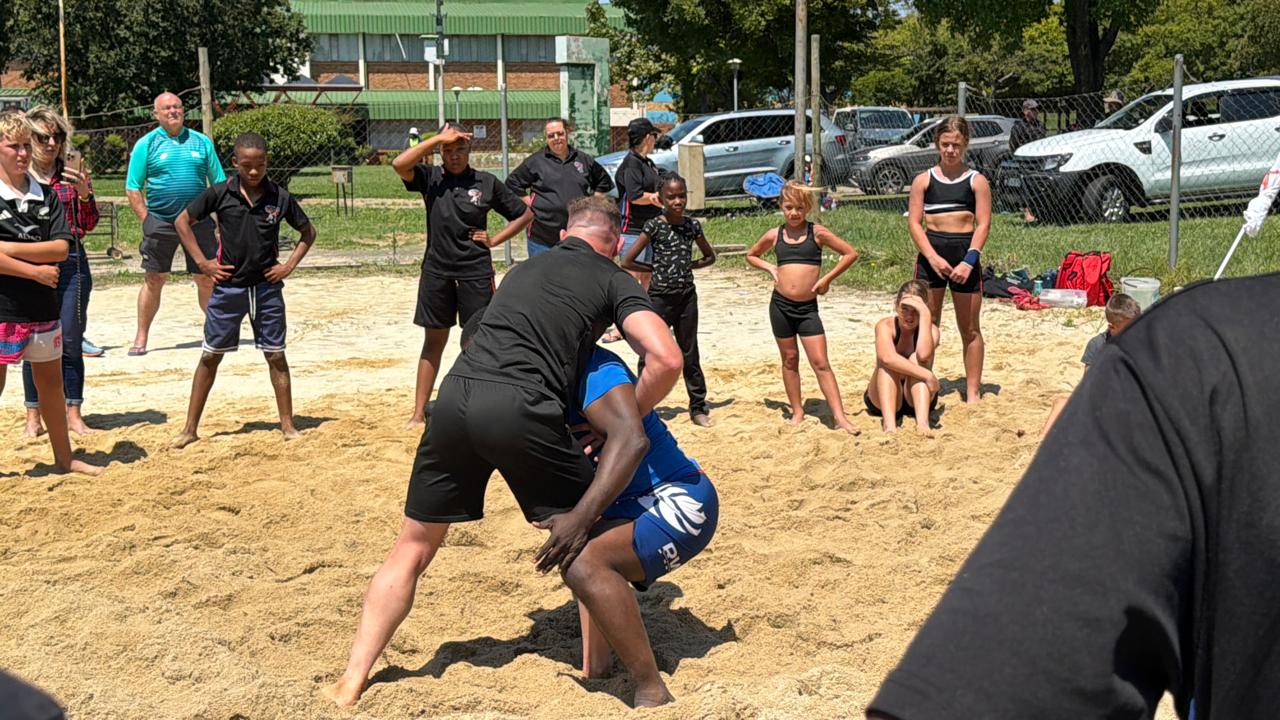
 The coach's course in Amman. (Photo: United World Wrestling)
“It was an excellent training course as all the participants are happy with it and wish to repeat such courses," Bouaziz said. "Members of the Jordan Federation and Olympic Committee expressed their thanks to the International Olympic Committee, UWW and the IF's development department for their great contribution and keenness to develop wrestling in the Kingdom of Jordan.”
Following the referee course, Khedri led 40 participants in the Introduction to Coaching and Safety Course (Level 1). The course included nine women [coaches and athletes] and 31 men [coaches, PE teachers, and athletes].
All participants learned the foundations of being a successful coach. They focused on the following areas: discovery games, introducing a new technique, coaching skills, giving feedback, risk management, age and developmental stage characteristics. During the course, the coaches actively practiced and developed their skills through practical evaluations.
“The atmosphere was distinguished, based mainly on teamwork, involvement and practice of all participants individually and by group system,” Khedhri said.
 A competition was held after the completition of both the courses. (Photo: United World Wrestling)
Following the completion of the two courses, the Jordan Wrestling Federation hosted a competition that allowed the referees and coaches to practice the skills that they learned. This competition had 80 boys and 16 girls participating which allowed 87 bouts to be wrestled.
After the competition, Khedhri conducted the Introduction to Practice Planning Course (Level 2). This course had 45 coaches participating [nine women and 36 men].
During this course, the participants learned the foundations of planning effective training sessions. They discussed the general framework for practice plans, risk management strategies in planning, creating activities during practice, video analysis, and effective time management. The participants were able to create practice plans that they could use in upcoming training.
“They were outstanding courses and a convincing performance from all the participants," Khedhri said. "The participants expressed the improvement of their knowledge and their desire to continue to participate in such courses and along with a commitment of the Jordan Federation, which expressed their complete satisfaction and thanks to Olympic Solidarity, the Jordanian Olympic Committee, and the UWW Development department, confirming their continued hard work for the benefit of Jordanian wrestling."

Share your thoughts.
Comments