

Historic Amateur MMA World Championships kicks off in Novi Sad
Saturday, October 18, 2025 - 09:17 By Vinay Siwach

NOVI SAD, Serbia (October 18) -- The first-ever Amateur MMA World Championships kicked off in Novi Sad Serbia in men's and women's.
The three-day event began with preliminary rounds and with quarterfinals, semifinals and finals scheduled for Saturday and Sunday.
The World Championships is live on uww.org and on Instagram.
Here are a few top photos from day one on Friday:
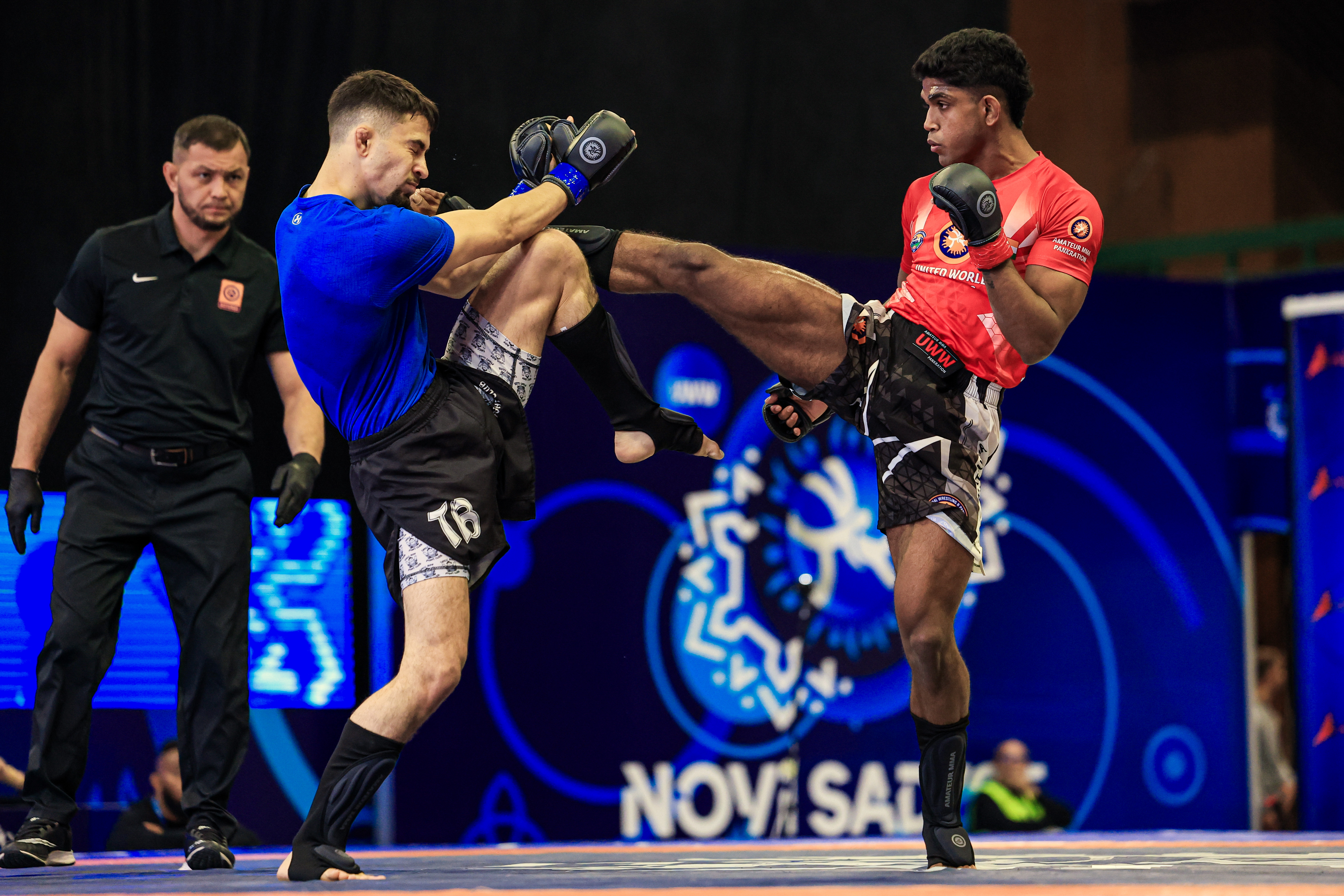 Scott HEATHCOTE (CAN), blue, and Aayush DIPU (IND) showing some early kicks during their match. (Photo: United World Wrestling / Amirreza Aliasgari)
The matches are of nine minutes divided into three rounds of three minutes each with two breaks of one minute each between the three periods.
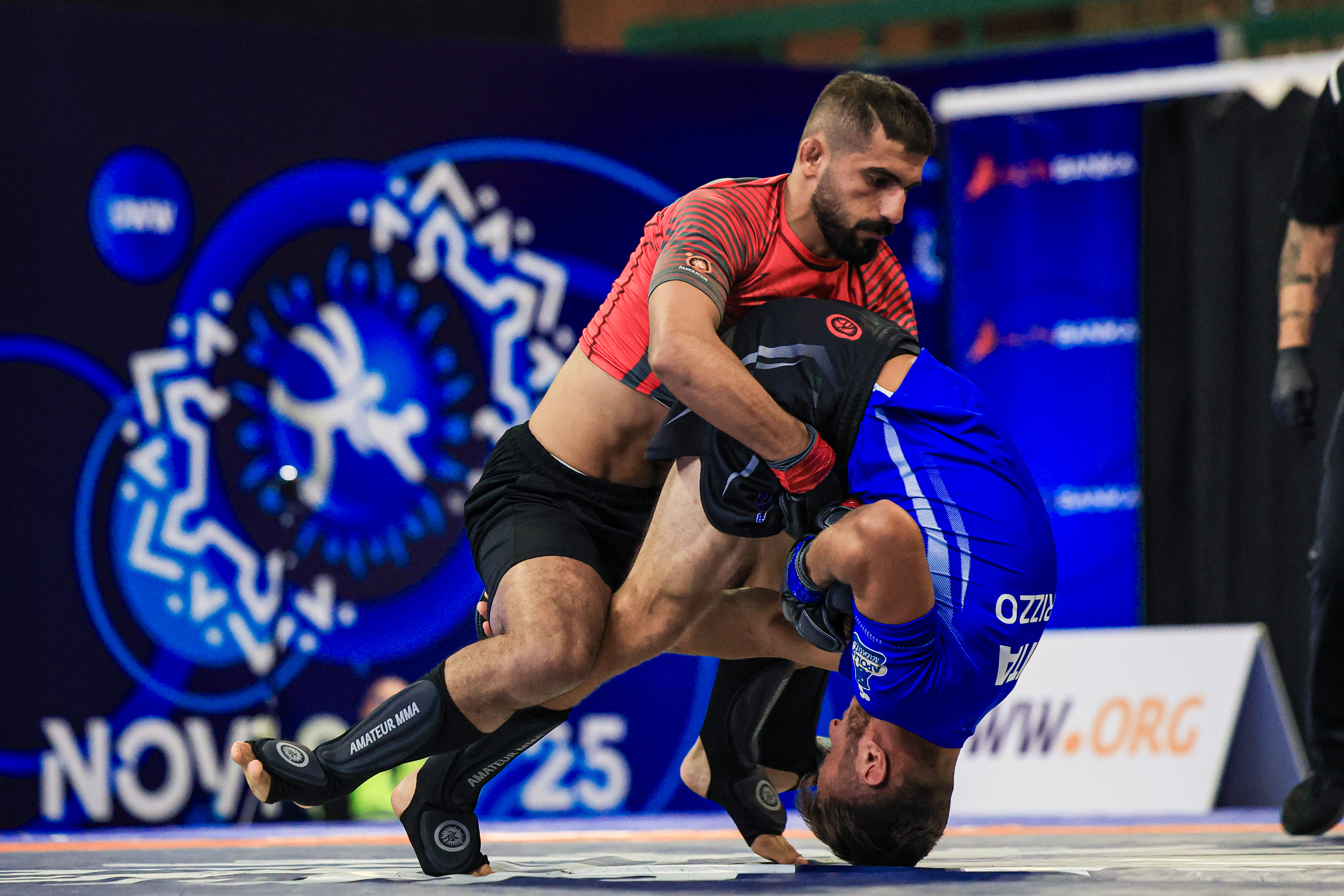 Front rolls for the win. (Photo: United World Wrestling / Amirreza Aliasgari)
The are fought without a headgear but with protective gloves. Other part of the uniform includes tight-fitting rash guards, shorts, and the fights are fought barefoot.
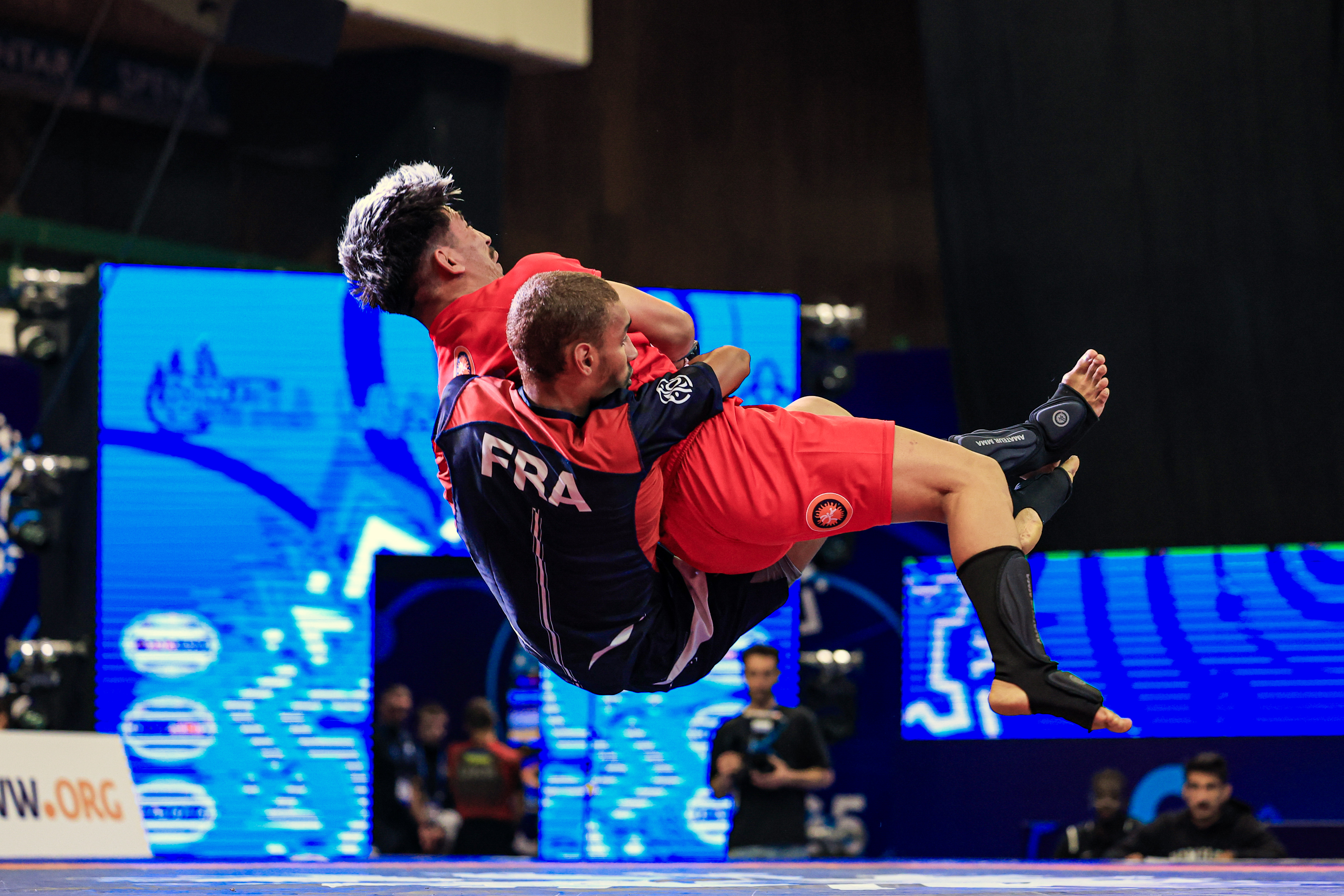 Up in the air. (Photo: United World Wrestling / Amirreza Aliasgari)
Athletes are allowed to wear mouthguards. However, the mouthguards cannot be of red color.
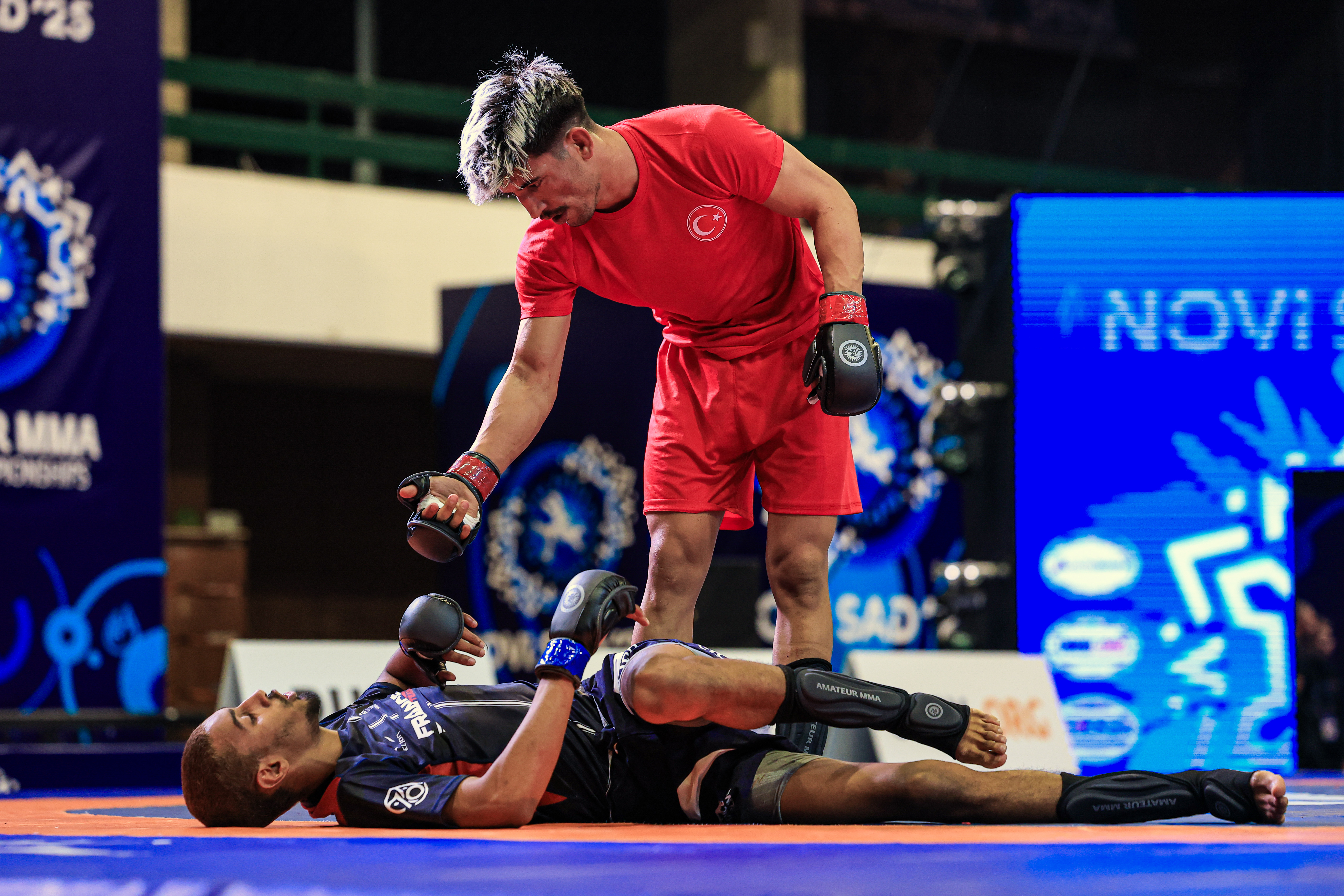 It's all about respect in the end. (Photo: United World Wrestling / Amirreza Aliasgari)
The UWW Amateur MMA is competed in various weight classes:
Men's (U20, U23, Seniors): 57kg, 62kg, 66kg, 71kg, 77kg, 84kg, 93kg, 100kg, 130kg
Women's (U20, U23, Seniors): 50kg, 53kg, 57kg, 61kg, 65kg, 70kg, 75kg, 80kg, 90kg
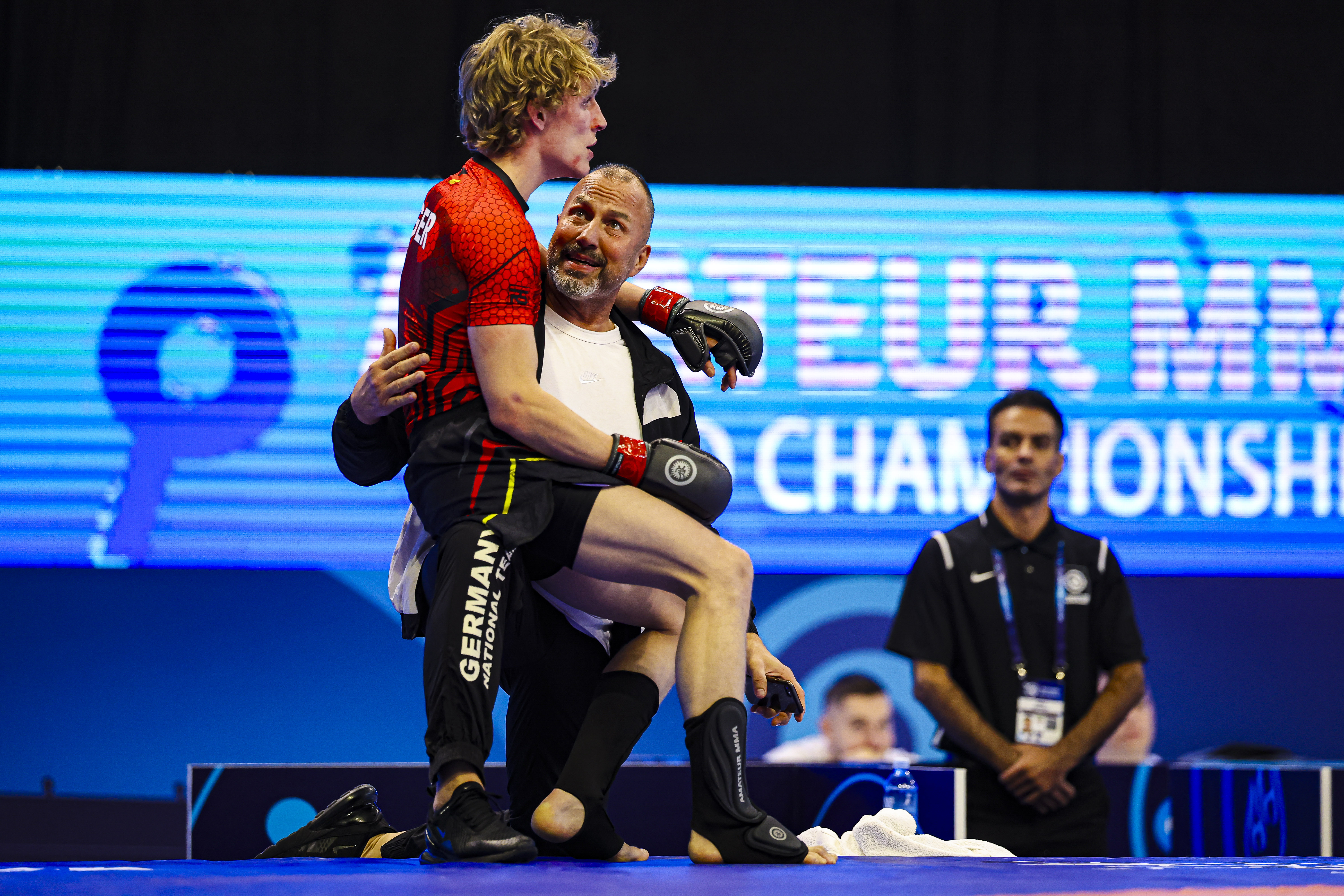 The coach improvised there. (Photo: United World Wrestling / Kadir Caliskan)
The various types of victories include: Submission, Knockout (KO), Technical Knockout (TKO), Disqualification (DSQ), Forfeit, Judge’s Decisions.
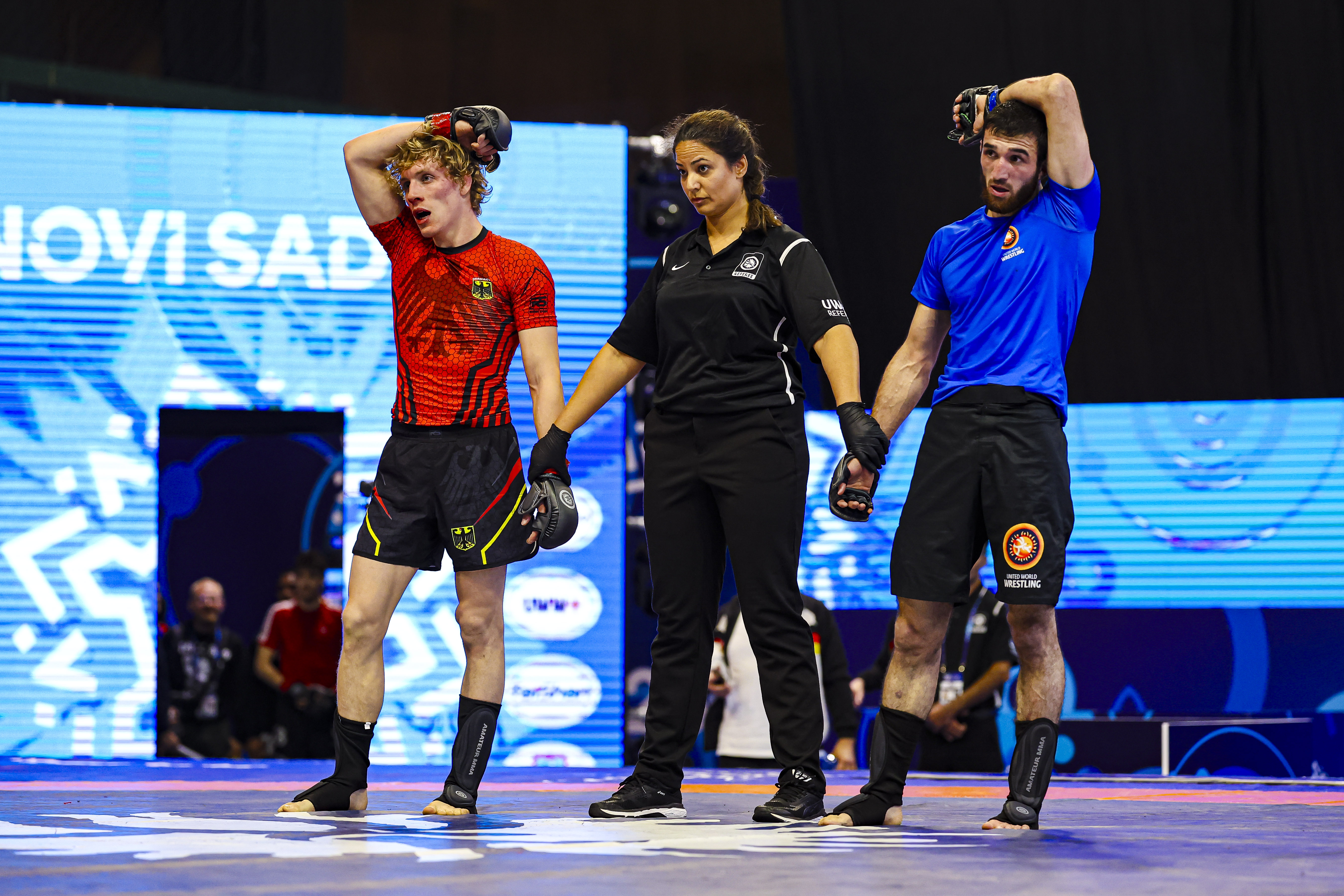 Win or lose, the reaction can't give it away. (Photo: United World Wrestling / Kadir Caliskan)
In certain cases, there can be draws in the bouts. Draw decisions occur in the following scenarios:
- Unanimous Draw: all three judges score the bout equally
- Majority Draw: two judges score the bout as a draw
- Split Draw: each judge scores the bout differently, resulting in an overall draw
- Technical Draw: awarded when a bout is prematurely stopped due to injury from an intentional foul after continuing, and subsequent injury forces stoppage from either legal or illegal actions with scores equal or insufficient for a clear winner.
Resolving Draws
If a winner must be declared (e.g., elimination rounds) and a draw occurs on the judges’ scorecards, the following criteria apply, in order:
1. The athlete who had points deducted for fouls loses the bout
2. If no fouls occurred, the athlete who won any single round by the largest margin (e.g., one round 10-8 versus two rounds 10-9) wins the bout.
3. If neither of these criteria resolves the draw, the Mat Chairman polls judges to vote for the winner. The athlete receiving the majority of judge votes is declared the winner. This decision is final and cannot be appealed

 Orkhon PUREVDORJ (MGL) celebrating after becoming a world champion in 2017. (Photo: United World Wrestling / Martin Gabor)
Share your thoughts.
Comments