

Libya hosts its first coach and referee course
Monday, November 17, 2025 - 08:37 By United World Wrestling Press
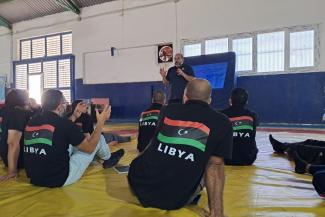
TRIPOLI, Libya (November 17) -- Libya hosted its first ever education courses for coaches and referees from October 27 to November 3 in Tripoli, Libya.
The courses were conducted in conjunction with United World Wrestling, Olympic Solidarity, Libya NOC and the Libya Wrestling Federation. The coaching course was led by Ahmed KHEDHRI. The referee course was led by Kamel BOUAZIZ.
"This course was considered a success, as we were fortunate to have tutors Khedhri and Bouaziz," Khaled EZANKULI, Secretary General of Libyan Olympic Committee, said. "These courses are a step in the Libyan Wrestling Federation's programs and is part of the joint work with Olympic Solidarity, United World Wrestling and the Libyan Olympic Committee. We consider it a step forward in developing the skills of local coaches, raising their level, and relying on their actual abilities to achieve fair competition."
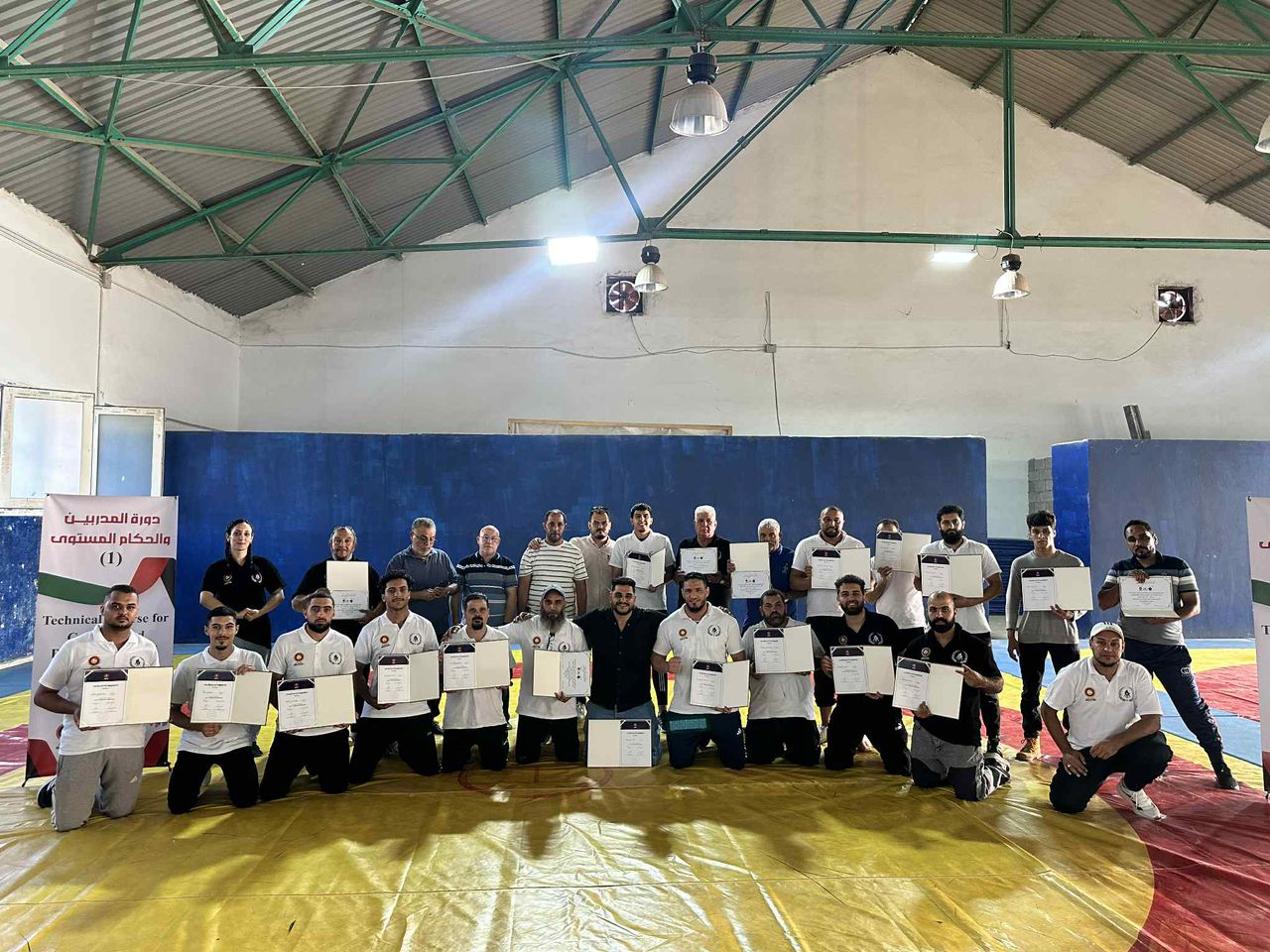
During the first half of the program, the technical course for coaches was conducted from October 17 to 31. The course was attended by 21 coaches who participated in Level 1 Course [Introduction to Coaching and Safety]. The following topics were covered throughout the course: discovery games, introducing a new technique, coaching skills, giving feedback, risk management, age and developmental stage characteristics.
The coaches actively practiced and developed their skills through practical evaluations. There was special emphasis placed learning new techniques and applying them in a realistic training environment.
"The coaches in the course showed lot of enthusiasm, cooperation, and exchange of experiences which was reflected in the participants’ active engagement and positive interaction throughout both the theoretical and practical sessions," Khedhri said. "This contributed to enhancing the overall learning outcomes and helped participants acquire new knowledge and skills in a professional yet friendly environment."
The Introduction to Refereeing Course was conducted from November 1 to 3. This course was led by Bouaziz and had 18 participants. The participants learned the foundations of what it takes to be a great referee.
The areas covered during the course included: safety of the athletes, evaluation of holds, referee mechanics, positioning, and controlling the bout.
"A good number of participants already had knowledge of wrestling," Bouaziz said. "They were very attentive to the explanations, which allowed me to pass on as much information as possible. The same was true for the theoretical part, where their participation and interest were remarkable."
The program was praised by the federation and the participants as well.
"I am very pleased with the success achieved by this course on both the technical and organizational levels. It represents an important step toward building a strong training foundation that will contribute to developing coaches and referees and raising the overall standard of wrestling in Libya," Nabil Abou CHAHMA, President of Libyan Wrestling Federation, said.

Share your thoughts.
Comments