Development

Wrestling Key Player in ASOIF's 'Women Lead Sports' Programme

By United World Wrestling Press

Led by UWW Development Director Deqa Niamkey, wrestling and its development team played a key role in fulfilling ASOIF's mission to provide classes and leadership opportunities to female leaders in sport looking to "strengthen their self-confidence and acquire important skills to influence, negotiate, communicate, navigate politics, manage stakeholders and lead in male-dominated environments"

A snippet from the ASOIF article:

During the last two months, more than 60 future women leaders from ASOIF’s member federations successfully completed a series of virtual live-coaching sessions, aimed at preparing them to serve in elective positions of their respective International Federation (IF), Continental Association or National Federation.

The “Women Lead Sports” online masterclass, run by professional coach Gabriela Mueller, was created to help increase the number of women in leadership positions across the Olympic Movement. Amongst others, participants learn how to strengthen their self-confidence and acquire important skills to influence, negotiate, communicate, navigate politics, manage stakeholders and lead in male-dominated environments. They also receive personalised coaching, helping them to define their next strategic steps. The course tailored to ASOIF’s member federations was adapted to the current reality of the COVID-19 pandemic, with congresses and elections taking place in different formats and requiring strong skills in digital communication. Senior women leaders joined certain sessions to share their experience, provide advice and inspire.

“The programme was a swift and effective response to prepare an equal future in a COVID-19 sports world and thereafter”, said Gabriela Mueller. “Even though in many cases the pandemic has been gender-regressive across several sectors, the online masterclass empowers women to run campaigns, get elected and lead.”

Full story on the ASOIF website, here

#development

South Africa completes phase one of UWW DNSS Program

By United World Wrestling Press

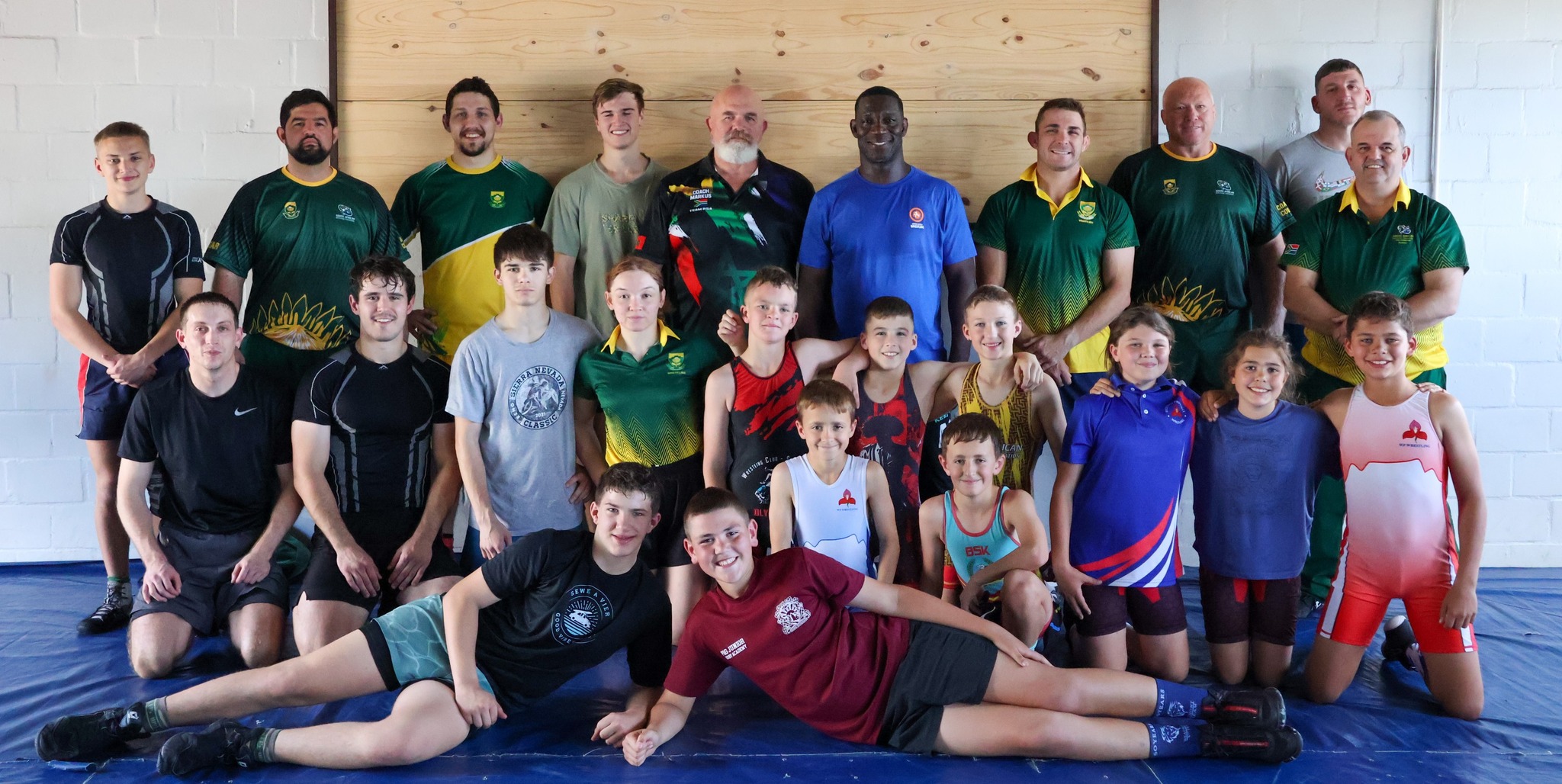
PRETORIA, South Africa (November 17) --  The South African Wrestling Federation successfully completed the first phase of the United World Wrestling National Development and Support Strategy (DNSS) from October 17 to 26.

Under the supervision of Vincent AKA, UWW International Development Officer for Africa, and the coordination of Markus DEKKER, member of the SAWF Coaches Council, a nationwide development mission was undertaken. The UWW-SAWF team visited provincial associations, conducting technical assessments, talent identification sessions, and workshops for coaches.

South Africa

Using the UWW National Federation Assessment Tool (NFAT), the mission provided a detailed overview of the current state of wrestling in South Africa -- from grassroots participation to elite athlete preparation.

The tour covered major provinces including Western Cape, Eastern Province, Free State, Northern Cape, Gauteng North, Limpopo, Mpumalanga, and North West, engaging hundreds of athletes, coaches, and local administrators.

The assessment revealed strong technical potential among the U15 and U17 categories, as well as a growing passion for wrestling across communities and schools.

The mission also identified the need for stronger governance structures and more consistent communication between SAWF, provinces, and clubs to unify efforts under a national development plan.

Both teams will continue to work towards second phase of the program which will include establishing two regional pilot centers [Pretoria and Western Cape] to act as training and coordination hubs, launch a "School Integration" program linking PE teachers, schools, and wrestling clubs, developing a national athlete database to monitor and support emerging talents.

It will also aim to organize governance and compliance workshops to reinforce management capacity, implementing UWW coaching courses nationwide, forming a National Technical Committee to coordinate DNSS implementation and introducing measurable evaluation indicators to ensure accountability and progress tracking.