

Kuwait Wrestling Federation developing wrestling through education
Tuesday, June 20, 2023 - 18:36 By United World Wrestling Press

KUWAIT CITY, Kuwait (May 26) – The Kuwait Wrestling Federation hosted its first-ever education courses for coaches and referees. These courses were conducted in conjunction with UWW, Olympic Solidarity, Kuwait NOC and the Kuwait Wrestling Federation from May 21-26 in Kuwait City, Kuwait. Mr. Mohammed ADELFATTAH (USA/EGY) led the Coaching Course, while contrast, Mr. Kamel BMOUAZIZ (TUN), Vice-President of the UWW Referee Commission and President of the Arab Wrestling Federation, led the Referee Course.
The technical course for coaches was conducted May 21-25. During the course, 18 participants attended and participated in this Level 1 Course (Introduction to Coaching and Safety). The following topics were covered throughout the course: discovery games, introducing a new technique, coaching skills, giving feedback, risk management, age and developmental stage characteristics. During the course, coaches actively practiced and developed their skills through practical evaluations. Overall, the coaches gained important knowledge and skills to help them improve in their role as a coach. "Wrestling is a new sport in Kuwait. I saw a good group of past wrestlers join the course who could be good coaches in the future for the Kuwait Wrestling Federation," said Mr. Abdelfattah.

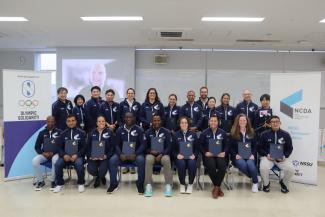
Participants of the education courses for coaches and referees gather for a photo. (Photo: United World Wrestling)
The Introduction to Refereeing Course was conducted from May 23-25. The course had 16 participants (14 men and two women). The participants learned the foundations of what it takes to be a great referee. The areas covered during the course included: the safety of the athletes, evaluation of holds, referee mechanics, positioning, and controlling the bout. The participants were active during the course and could practice their skills through practical assessment. "During the theoretical lessons, the participants actively asked questions and wanted to learn. The enthusiasm and atmosphere in the course were excellent. They were constantly requesting to learn as much as possible," said Mr. Bouaziz.
After the courses, the Kuwait Wrestling Federation organized a competition on May 26, allowing the coaches and referees to practice the new skills they learned.
"On my own behalf and behalf of all my colleagues of the Kuwait NOC Executive Board, I would like to express my gratitude for hosting the Wrestling Technical Courses for referees and coaches in collaboration with Olympic solidarity, which was at the Kuwait Olympic Committee headquarters from May 21-26," said Mr. Mohamed Amir SAADI, Technical Director, Kuwait Olympic Committee. "This valuable course has been conducted by UWW experts, who do a great job."
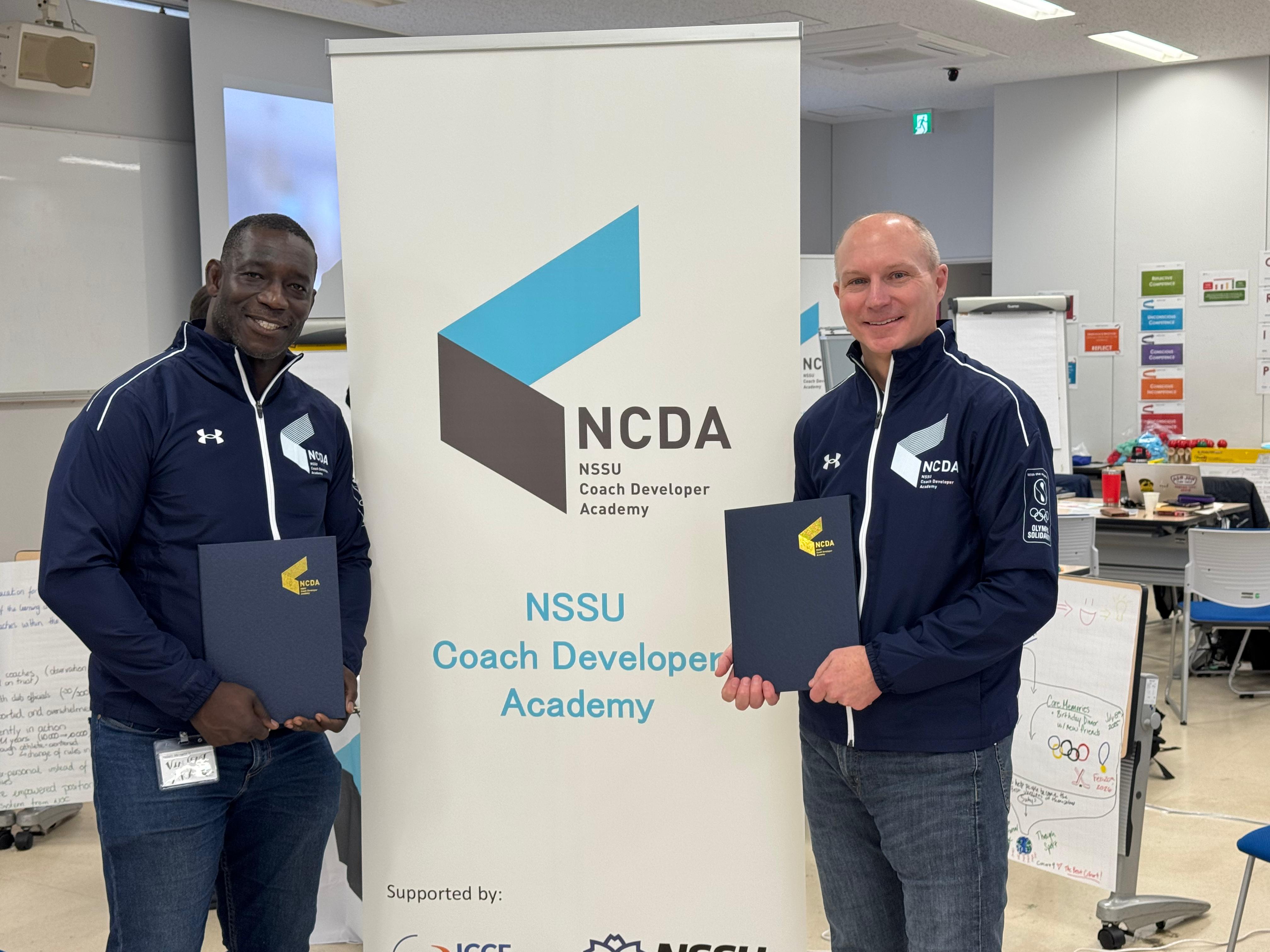 UWW Educators Vincent AKA, left, and Zach ERRETT.
Share your thoughts.
Comments