#development

South Africa Advances National Wrestling System with DNSS Phase 2

By United World Wrestling Press

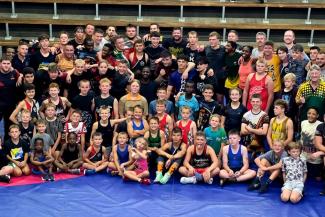
PRETORIA, South Africa (April 8) -- South Africa has reached a decisive milestone in its long-term wrestling development strategy with the successful implementation of Phase 2 of the Development of National Sport System (DNSS) programme, delivered in collaboration with United World Wrestling (UWW) and supported by Olympic Solidarity.

Following the diagnostic and mapping phase conducted earlier, Phase 2 marks a clear transition from analysis to structured implementation, laying the foundation for a sustainable and internationally aligned wrestling system.

Led by UWW Development Officer Vincent AKA, in close cooperation with the South African Wrestling Federation (SAWF), the National Head Coach, Markus DEKKER and Provincial Coordinators, the programme was deployed across multiple provinces through a structured 10-day intervention from March 2 to 13. 

Activities were conducted in key locations including:

· LPWA (Ion Bachu)
· CGWA (Ruiter)
· NGWA (Menlo Park Hall)
· Frank Joubert Tournament (Menlo Park Hall)

This nationwide approach ensured direct engagement with provincial structures, strengthening alignment between national leadership and local associations while promoting inclusive development across the country.

From Talent Identification to System Building

Unlike traditional training camps, DNSS Phase 2 focused on identifying talent and building long-term development systems. Wrestlers and coaches from all age categories -- U13, U15, U17, U20, and Senior -- were actively involved, ensuring a complete pathway approach.

Provincial visits and stakeholder meetings played a key role in assessing facilities and operational structures, strengthening coordination between SAWF and provinces, and identifying emerging wrestlers.

Building Athlete Pipeline

A training camp for different provinces brought together wrestler to consolidate talent identified during Phase 1 and introduce standardized training methodologies.

The training camp included technical sessions, physical conditioning, match simulations and wrestling. The initiative contributed to the creation of an updated national prospect and the foundation of a structured athlete monitoring system.
South Africa

Beach Wrestling Gains Momentum

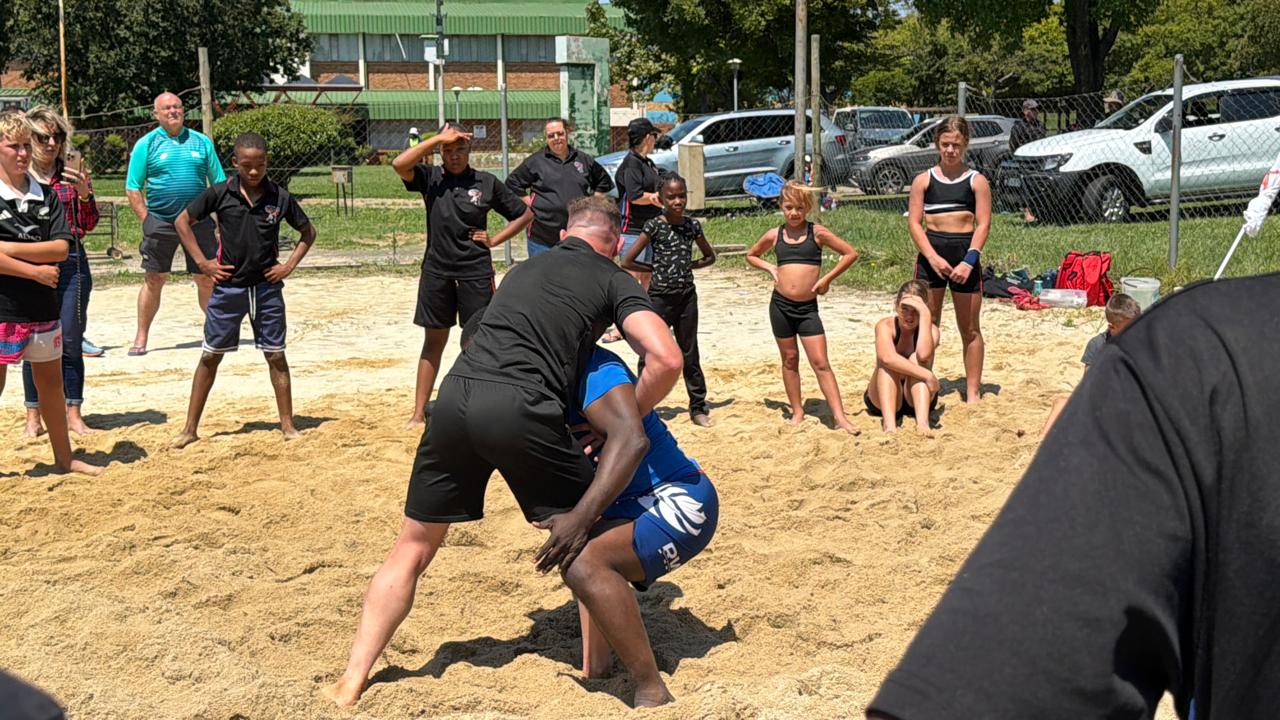
As part of the DNSS activities, a Beach Wrestling training session in Roodepoort highlighted the programme’s expanding impact.

During the visit, Aka led a specialized session, sharing advanced technical insights adapted to beach wrestling. It included stance and balance adjustments, grip and control techniques, and movement adaptation on sand.

The training programme comes at a crucial time, as South African athletes prepare for African Beach Wrestling Championships in Alexandria, Egypt and other international tournaments.
#development

Strength Through Solidarity: Palestine, Jordan Partnership Strengthens Wrestling Development

By United World Wrestling Press

AMMAN, Jordan (February 10) -- A two-week wrestling development program aimed at strengthening wrestling in Palestine concluded on January 25, marking the completion of the first phase of the Development of National Sport System (DNSS) in Wrestling framework. 

The program, held from January 11 to 25 in Amman, Jordan, brought together 17 Palestinian participants, including athletes and coaches. The initiative was organized through a partnership between Olympic Solidarity and United World Wrestling, with logistical and technical support from the Jordan Wrestling Federation.

The coaching course and training camp were delivered by Hassan MADANY (EGY) and Ahmed KHEDHRI (TUN), both UWW-certified educators and wrestling experts in the region.

Palestine

The training course featured a combination of classroom instruction and on-mat technical training, designed to advance coaching standards while improving wrestling performance. The program also included practical teaching sessions, during which participants learned how to introduce and teach new skills using key factors and Discovery Games, supported by continuous evaluation to monitor learning progress.

Practical training emphasized foundational wrestling skills, including stance, movement, and level transitions. Participants practiced core offensive and defensive techniques, including single-leg and double-leg takedowns, grip control, sprawls, and pinning combinations.

The program also incorporated instructional methodology workshops, where participants practiced introducing new techniques using structured teaching models and game-based learning strategies, supported by continuous performance assessments.

The theoretical component covered wrestling fundamentals, including rules, terminology and technical principles, alongside broader athlete welfare subjects such as safety protocols, risk management, safeguarding measures and anti-doping education. Other sessions also explored coaching communication strategies and methods for identifying performance indicators critical to technical development, particularly for youth and beginner athletes.

Palestine

United World Wrestling Asia Council President Mohammad AWAMLEH and Palestine Wrestling Federation President Firas DOUDIN attended the program. 

"I express my sincere appreciation to Olympic Solidarity and United World Wrestling for their continued support of the Olympic Development Program," Doudin said. "It plays an important role in strengthening wrestling structures in Palestine. I thank the educators for their professionalism and commitment, as well as the Jordan Wrestling Federation and the UWW Asian Council leadership for their support and cooperation."

Participants described the course as a valuable learning experience, highlighting the quality of instruction, the balance between theory and practice, and the progressive on-mat training approach.

Palestine

The execution of the program marks a crucial step in developing coaching and wrestling in Palestine, demonstrates solidarity, and reflects UWW’s commitment to sustainable wrestling development worldwide.